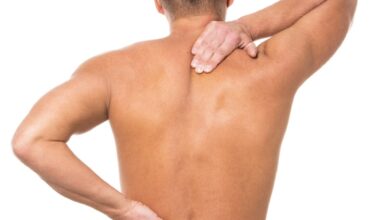

“My hips feel really tight.”
It’s something we hear all the time in clinic.
So, the first instinct is to stretch.
People add mobility drills.
They spend time loosening their hip flexors and quads.
Sometimes it gives a bit of relief.
But before long, the tightness is back.
So why does it keep happening?
Quite often, the problem isn’t isolated to the hips. It’s part of a bigger pattern involving what’s known as the anterior chain.
What Is the Anterior Chain?
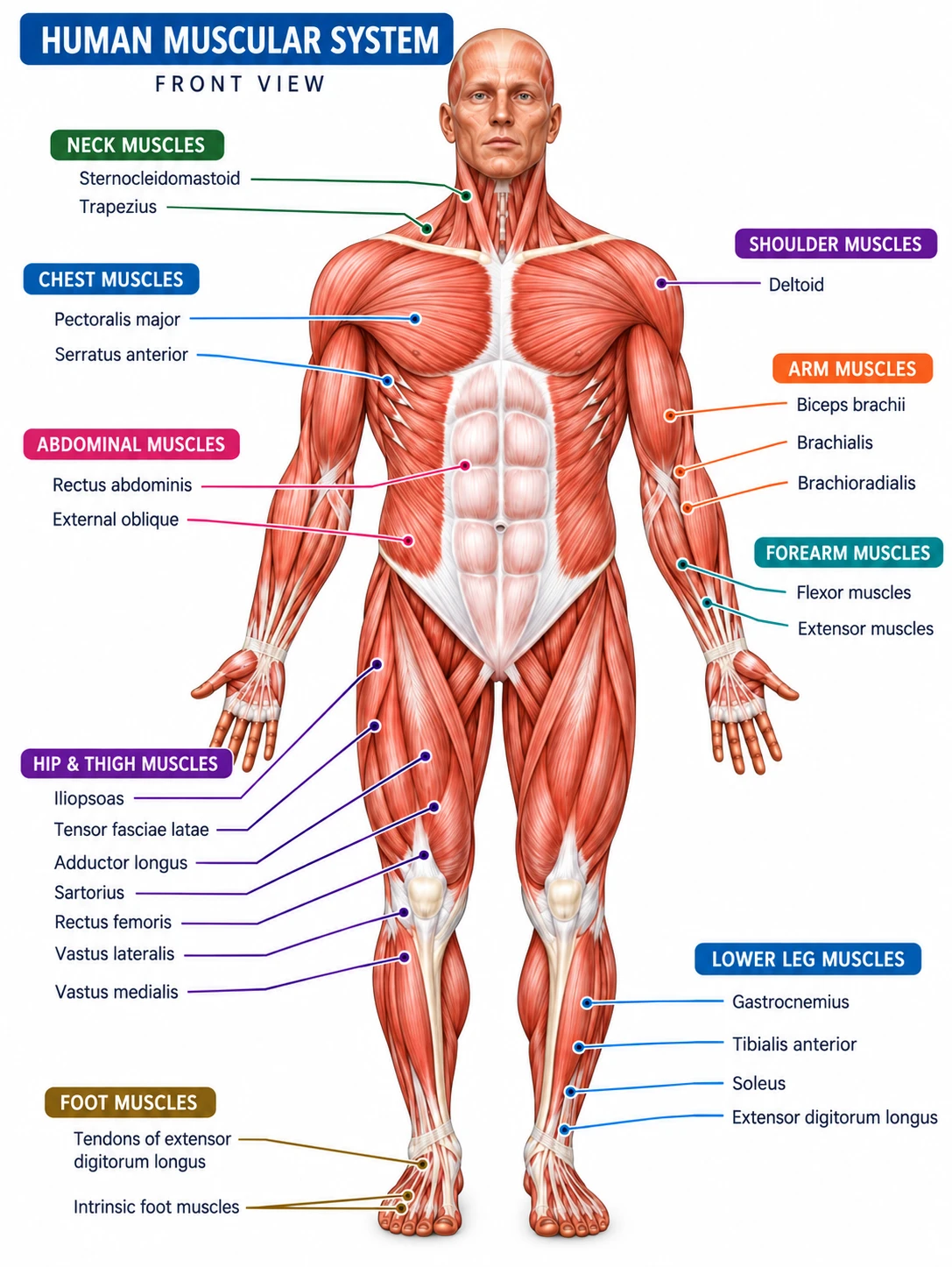
The anterior chain refers to the muscles along the front of your body. Some of these muscles are:
- The hip flexors
- Quadriceps
- Abdominal muscles
- Chest
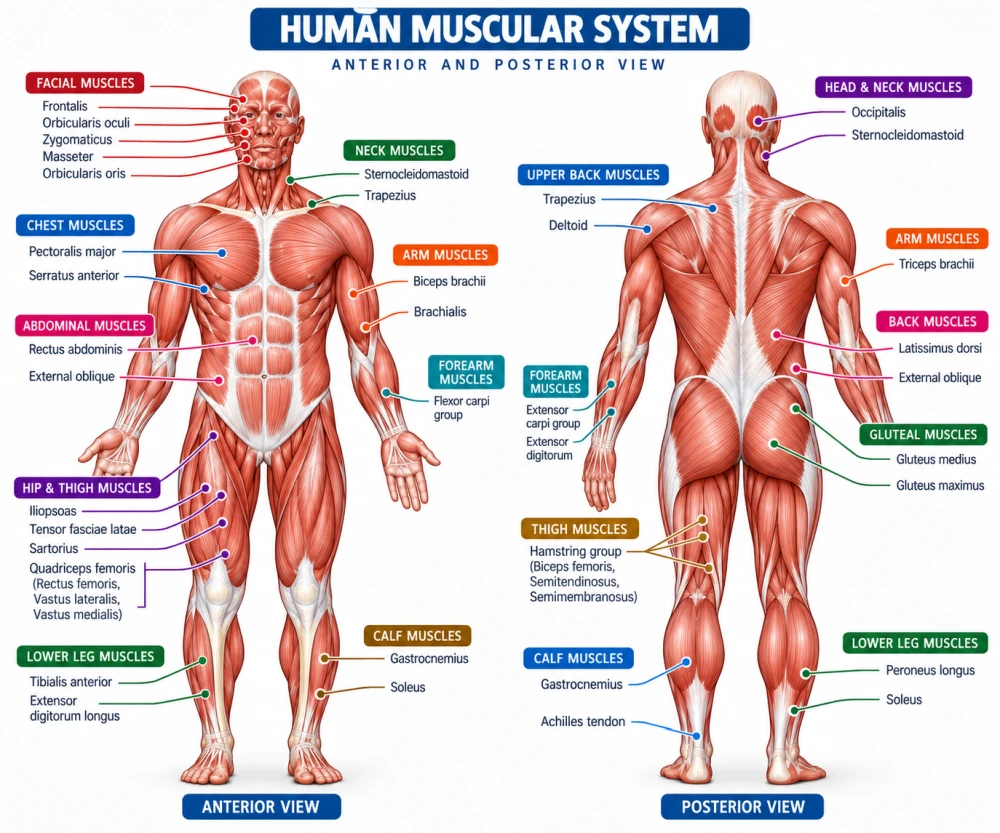
These muscles don’t work in isolation. They function as a connected system, working together to control movement and support posture.
Whether you are walking, climbing stairs or standing upright, your anterior chain is constantly active.
Why It Matters?
The anterior chain plays a key role in how your body moves and feels.
These muscles:
- Help drive forward movement
- Control hip and knee position
- Stabilise your pelvis and spine
They also play a major role in posture, particularly in how you hold yourself throughout the day.
When this system isn’t functioning well, other areas such as the lower back or knees often take on more stress.
Why Problems Start?
Modern lifestyles are again a big factor.
We spend a lot of time:
- Sitting at desks
- Driving
- Using phones and laptops
Over time, this can lead to:
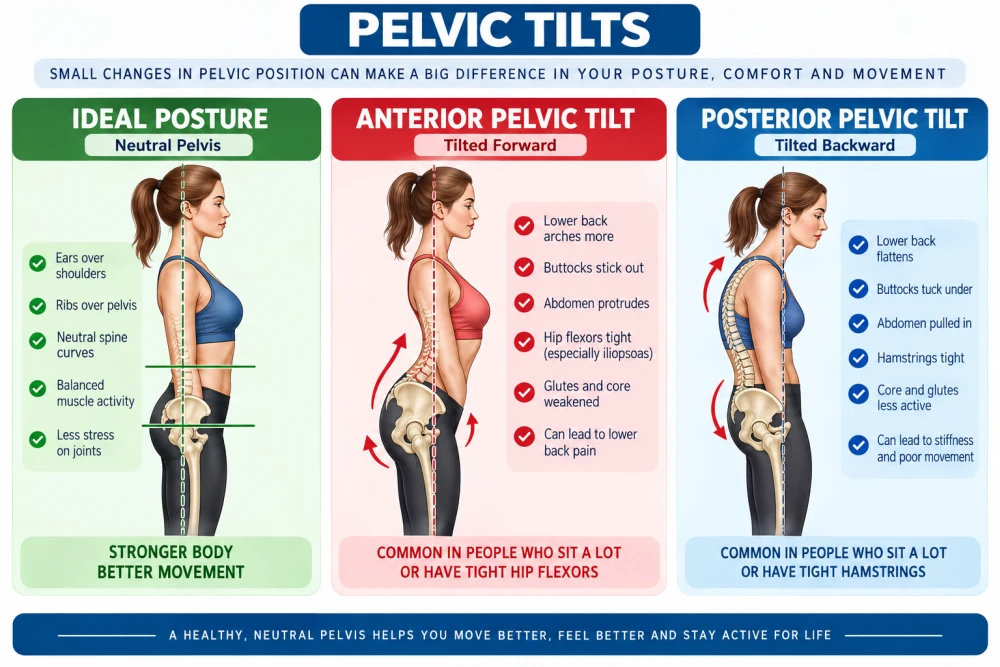
- Tight hip flexors
- Overactive quadriceps
- Reduced core control
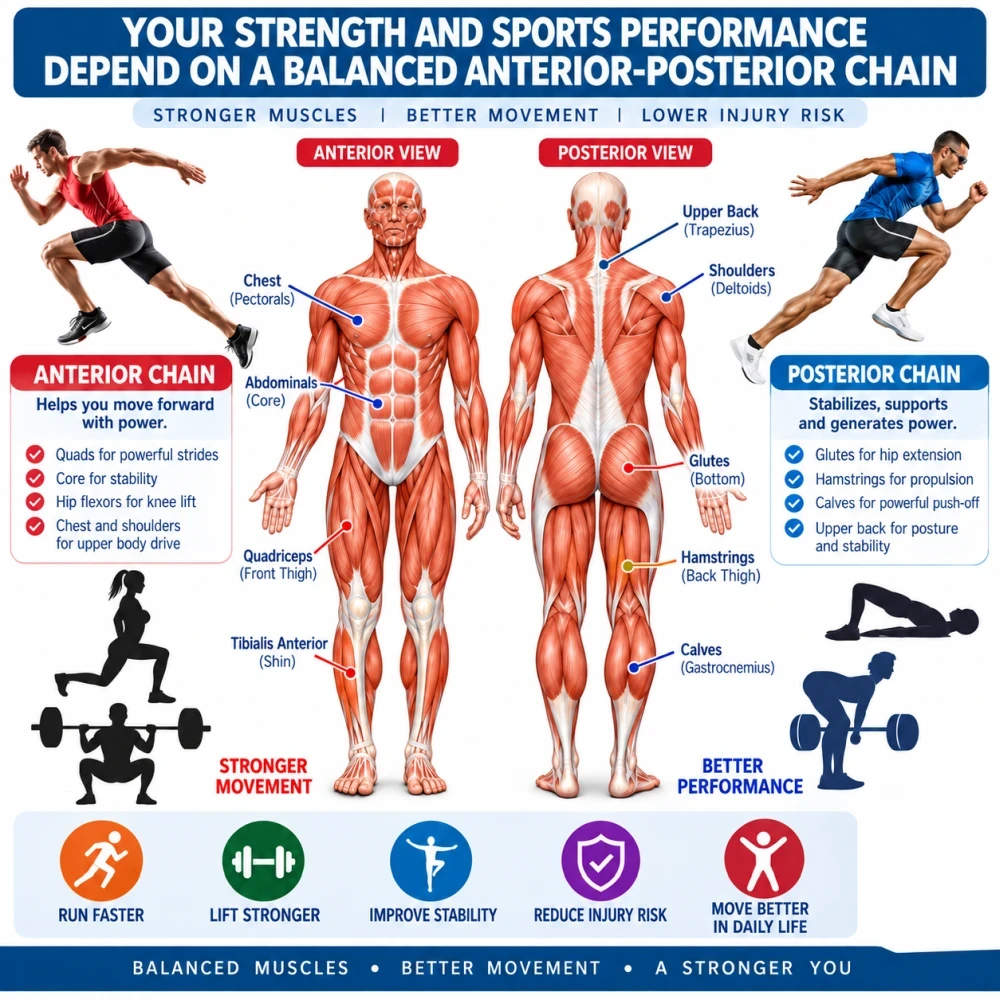
When this happens, the anterior chain becomes dominant, and the balance between the front and back of the body is lost.
Other muscles are then forced to compensate.
The “Tight Hip” Problem
This is where things often get misunderstood.
That feeling of tightness at the front of your hips doesn’t always mean the muscles simply need stretching.
Often, it means the muscles are:
- Overworking
- Poorly controlled
- Not being balanced by other muscle groups
The core may not be supported properly.
The glutes may not be contributing enough.
So while stretching can give temporary relief, it doesn’t address the underlying issue — which is why the problem keeps coming back.
Signs Your Anterior Chain Might Need Attention
You might notice:
- Persistent hip flexor tightness
- Lower back discomfort
- Postural changes (arched lower back)
- Knee pain (particularly at the front)
- Stiffness after sitting
- Reduced control during squatting or walking
If these keep coming back, it is often worth looking beyond just the area that feels tight.
What Actually Helps?
At The Sherwood Clinic, we focus on how your whole body works together, not just the painful area.
Treatment may include:
- Specific exercises to activate the deep core muscles and reduce strain on the muscles at the front of the body.
- Movement retraining to encourage healthier posture and more efficient movement patterns.
- Progressive strengthening to improve muscle balance between the front and back of the body.
- Plyometric Exercise program: This rehabilitation program may be offered based on t he age of the patient, thehistory and type of the injury, baseline strengths, experience of resistance training. Our expert clinicians will include appropriate warmups before beginning the plyometric drills.
The focus is on achieving lasting improvements in how your body moves and functions, rather than simply providing temporary symptom relief.
The Bigger Picture
The body rarely works in isolation.
Everything is connected.
The anterior chain is a key part of that system.
When it becomes dominant or poorly controlled, symptoms can appear in different areas — often away from the real cause.
The key take away is,
If you have been stretching your hips regularly but still feel tight, or if symptoms keep returning, it may be time to take a different approach.
Sometimes, the issue isn’t a single muscle on its own. It’s how everything is working together, in sync and harmony.
Why not have a consultation with one of our MSK specialist clinicians to identify the underlying cause of your problem so that you can be guided into the management specific and tailored for you.